The post A Case for Long Books appeared first on Publishing Solutions Group.
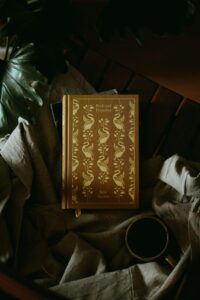
]]> I’ve always been drawn to the allure of a long book. In middle school, I remember lugging around a hardcover copy of Harry Potter and the Order of the Phoenix, proudly turning startled heads as I thumped the book to my desk during break time. I took a certain pride in wading through these long books, feeling that there was something to be gained with literally spending lots of time between the pages. And as I got older, I always made a point of timing my longest books for school breaks.
Last summer, I spent a few weeks in the wild west of Larry McMurtry’s Lonesome Dove. As each page and each minute passed by, I not only became more immersed in the story, but the general cultural contexts McMurtry was working from. I now know where Ogallala, Nebraska is, and the politics of managing a multi-man cow herd. Building the stamina to engage with a story for such extended lengths allows for an ambient type of learning alongside the facts and figures presented on the page. I now have a grasp for the genre conventions of a western alongside an understanding of horse’s temperaments. Trusting in McMurtry to guide me for these thousandsome pages means trusting that there will be something to be gained by the end of the journey.
While I think long books are wonderful, there is the argument that spending ages with these dense tombs is a waste of time, time that could be better spent reading snappier, more efficiently written texts. The good news is that there’s value to both, and a healthy reading diet mixes the two. During a busy semester, a student may find it easiest to float in and out of quick novels and poetry collections. I find those are the easiest books to pick up during the school year as I can move through them quickly alongside my other schoolwork, but come spring break, it’s time for something a bit more engaging. This past spring break, I traded Miami and Boca Raton for a trip on Melville’s Pequod. And just as Lonesome Dove had before, Moby-Dick transported me to a place and time brand new. All of a sudden, I was floating on the misty Atlantic, placed right in the antiquated minds of crusty, transcendental sailors. The slog through whale taxonomies and intricacies of rigging a commercial whaling vessel led way to breathtaking moments of clarity, moments which meant so much because of the arduous page count journey before.
While I love to read books of all length, a long book lends itself to the escapism many people look for in fiction. In just a few pages (if the book’s good enough…) I’m hooked on a week-long ride where I can see a new world through someone else’s eyes. Spending such extended time with a book may feel tedious at times, but agreeing to spend such time in another author’s style is a great practice in trust. By the end of the book, it feels as if you’re returning from your own journey, taking with you lessons that are much more real than fiction.
Publishing Solutions Group
Publishing Solutions Group values long books for their thoughtful defense of immersive, indepth storytelling in an age of short attention spans. PSG shares a commitment to meaningful content and can support projects like this with comprehensive editorial, design, and production services—helping bring expansive ideas to life with clarity, quality, and impact.
Photo by Atrem Beliaikin on Unsplash.
The post A Case for Long Books appeared first on Publishing Solutions Group.
]]>The post Jane Austen and The Timeless Love Story appeared first on Publishing Solutions Group.
]]> When you think of 19th century novels, most often than not, one of the big names that comes to mind is Jane Austen. This is no mistake, as she is one of the most influential writers of all time and has left a lasting impression on literature. Her stories aren’t grand or haughty in their manner, nor does she lean into the fantastical; rather they zoom in on the mundanity of life and the beauty of small moments.[1] She’s incredibly accessible, her prose rich with “comedy” and “self-awareness.”[2] It’s a delicious shrewd voice that places her society—and perhaps ours—on a stage, to be observed and critiqued.[1]
Austen had a hand in popularizing a style of storytelling known as Bildungsroman—a coming of age novel that focuses on moral and psychological growth.[3] She wasn’t alone in this endeavor as many of her contemporaries leaned on this style to write their books, a notable mention being Charlotte Bronte’s Jane Eyre. Austen was also a pioneer of the free indirect third person narrative, where the voice of the character and the narrators meld together, and you are able to access everyone’s thoughts as you read.[2]
Her style and character of writing then come together to create six novels that sink their nails into the “manners of middle-class life…of her time” and demonstrate its hand in the life of her heroines.[1] All flawed in some way or another, all with an intrinsic knowledge or misconception about the world that they must overcome, all while navigating the strictness of society as women. She discusses a variety of themes, including difficult ones such as grief and regret through her characters.[2] One of the areas that she truly shines, in addition to creating well-developed characters, is in her exposition of romance. There is no one way to fall in love in an Austen novel, no true recipe for happily ever after beyond compassion for the self and for others. In the humbling of all parties involved, be it Fitzwilliam Darcy’s pride or Emma Woodhouse’s well-intentioned manipulation, true empathy and companionship can be found. It is not until both the heroine and the love interests have “gotten over themselves” that a romance flourishes. In this, representations of love in her work are timeless, still serving as blueprints for other tales to come about. Critics have noted that part of what makes Austen’s novels so readable is “you could reread it and it gets more interesting.”[2]
The romance genre has seen quite the boost in the last few years with the introduction of BookTok and the large following many romance-filled books tend to garner. With new titles out every Tuesday, it is a near impossible feat to read and weigh the substance of every one that has a moment in the spotlight. But are there any that live up to Jane Austen’s romantic legacy? Any 21st century paperbacks that can hold a candle to the richness and complexity of her romantic plots?
I happen to think that there are a few titles from the last few years that embody the essence of a Jane Austen novel. Stories that show tremendous individual growth and self-reflection along with finding—or keeping—a partner. Mind you, it’s mostly singular titles as opposed to an author repeatedly carrying this feeling within every book. So here are two titles that felt as though I was reading a modern Jane Austen novel.
Having read it twice and being one of my all-time favorite books, I can’t say that I am not biased when it comes to Emily Henry’s Happy Place. Often labeled and marketed as a second-chance romance, Happy Place follows medical resident Harriet as she tries to come to terms with breaking up with her fiancé while on a group vacation with him and friends who don’t yet know the news. A deeply emotional story that shows how you view yourself can negatively affect your relationships, and by the time you realize who you are and what you really want, it could be too late. Incredibly reminiscent of Persuasion, and Anne Elliot’s struggle with self-doubt, and her role in the world. Henry also touches on darker themes like grief, burnout, and depression.
It has been about three years since I’ve read this one, and I am very much overdue for a reread, but Alone With You in the Ether by Olivie Blake is another romance book that centers on the human condition, much like Austen’s stories on some level do. Now I cannot quite pinpoint which Austen novel or heroine it is most like as I can find pieces of them all in Regan—Emma’s shrewdness and self-assurance, and even some of Catherine’s instability to name some. Alone With You in the Ether follows two polar opposites falling in love with each other and finding comfort in the foreign “quirks” of the other. Regan is a “bipolar counterfeit artist undergoing court-ordered psychotherapy” and Aldo “is a doctoral student who manages his destructive thoughts with compulsive calculations about time travel.”[4] It was a genuinely captivating read.
That is all for now folks! I hope you have enjoyed my clumsy attempt to highlight some authors writing modern romance that live up to Austen’s ability, if only just a little.
[1] https://www.britannica.com/biography/Jane-Austen/Austens-novels-an-overview
[2] https://news.stanford.edu/stories/2017/07/stanford-literary-scholars-reflect-jane-austens-legacy
[3] https://www.merriam-webster.com/dictionary/bildungsroman
[4] https://www.goodreads.com/book/show/54208009-alone-with-you-in-the-ether
Photo free to use under the Unsplash License.
The post Jane Austen and The Timeless Love Story appeared first on Publishing Solutions Group.
]]>The post Past and Modern Classics of the Fantasy Genre appeared first on Publishing Solutions Group.
]]> Fantasy literature has some ancient roots that have grown and flourished into what it is today through different movements, including the renaissance and romanticism. Its evolution encompasses contributions from all over the world—ghost stories, religious stories, fables, folklore, and fairy tales. Though some influences—like the stories of knighthood from the Middle Ages—are more felt than others. The fantasy genre that we know today was solidified between the nineteenth and twentieth century. Allow me to track some of its most notable components, how it differs from similar genres, and recommend some excellent new titles.
Fantasy is anything with a fantastical element. It doesn’t have to be a tale that takes place in a completely new world, fantasy can be as easy as having a magic mirror in an otherwise ordinary world. The mere existence of this unexplainable object transforms the story into one of fantasy. One time, I read a story about a girl who’d travel to Colorado to ski every year, and on her last trip she realized the ski resort she would stay at had a portal to several other worlds. A simple premise with a magical twist.
One of the earliest forms of fantasy in recorded history is that of Homer’s Iliad and the Odyssey.[1] The mythology found within is one that has stayed with us for centuries, giving way to an indefinite number of stories that emulate some or all aspects of it. And at the center of these myths is magic, for how else does Athena burst from Zeus’s head, or Medusa survive without her head of snakes turning on her? How does Poseidon control the sea, and how are these Gods so tangible in their heavens? But Greek mythology isn’t the end-all be-all for fantasy origins. Many other cultures, legends and religious tales have influenced the genre as well. Celtic tales and Geoffrey of Monmouth’s the legend of King Arthur and wizard Merlin have spread throughout the world alongside Mayan stories of the sun and their many other Gods.[2] Creation myths from all parts of the world have at some point or another crossed paths with someone writing or telling a fantastical story that just needs something more. With such a broad definition, the sources of inspiration are truly endless.
But how did we come to have the full arcs and worlds we know today? How did stories, for the most part being passed down orally, eventually condense into a mass-market paperback, or a gold-foiled hardcover?
Well, in the Middle Ages, stories with fantastical elements were often told to teach a lesson, to protect or warn people, and to instill a sense of morality. But then during the renaissance, the priority shifted towards entertainment, and finally with romanticism, the poets made love ballads and plucked poetry out of myths.[1] John Keats’ La Belle Dame Sans Merci and Percy Bysshe Shelley’s Queen Mab are some notable examples inspiring art that, in turn, inspired even more narratives of the following decades.[3] Alongside the poets, collections of fairy tales were also bound at this time for a target audience of children.
With these changes in audience, purpose and form, towards the end of the 19th century finally came what is regarded as the first fantasy novel: Phantastes: A Faerie Romance for Men and Women by George MacDonald.[1] From it, everything sort of snowballed. Lewis Carroll and H. Rider Haggard followed first with their own novels. Then, within the 20th century and amidst the wars taking place, the desire for escapism rose and fueled the classics we’ve come to know and love. In 1937 Tolkien publishes, C.S. Lewis in 1950, and Ursula K. Le Guin in 1968. The sagas of these authors, among many others, build the blueprint for current fantasy books.
Many people seem to miss and long for the age of the greats mentioned above, and it’s reasonable to feel that nostalgia. However, fantasy has not lost its momentum. It has grown exponentially and holds a wide array of subgenres. There are dozens upon dozens of would-be classic books and series out there, you just have to look beyond some of the noise to find it.
First, let’s get some things straight: fantasy and science fiction are not the same thing! Some sci-fi can be labeled fantasy and some fantasy can seem like sci-fi, but they both have their own unique definitions. Fantasy is rooted in things that aren’t real or possible, but science fiction tends to create fantastical worlds with plausible, reasonable explanations.[4] Sci-fi often shows a world that could be possible in a lost past, parallel, or future reality. Fantasy is a world that is fundamentally different with the existence of a magical element. Crossovers do occasionally happen but let’s put that aside for now.
Just kidding! My first recommendation of excellent modern fantasy is N. K. Jemisin’s Broken Earth Trilogy, particularly the first title: The Fifth Season. In this world, apocalyptic “seasons” can ravage entire civilizations. We follow characters through the survival of the latest one and are given a glimpse into what led us all to the first chapter. It is masterfully told.
Another brilliant book from recent years is Samantha Shannon’s The Priory of the Orange Tree. Dragonriders, queens, and priests! What more could you want? Shannon makes good use of her characters to give us an in-depth view of the expansive world she has created with its own history, religion, and dubious lineages.
Next up, a deeply political fantasy title: The Traitor Baru Cormorant by Seth Dickinson. We follow Baru, whose homeland has been colonized, as she makes her way in and through the new regime. Let’s just say, she’s playing a long game. Be warned, though, as this is a currently unfinished series with no publication date in sight for the next book.
Last but not least, a personal favorite: Tessa Gratton’s The Queens of Innis Lear. If it wasn’t obvious by the name, it is in fact based on Shakespeare’s King Lear. Three daughters fighting for a crown amidst a prophecy. Talking stars and talking trees and blood magic. Expect the unexpected, and have fun!
These titles all have my personal stamp of approval. Pick any of these up for a funky good time! But please check trigger warnings ahead of time. Thank you for reading!
[1] https://bkbass.com/essays-articles-and-musings/genre-studies/history-of-fantasy-literature/
[2] https://the-artifice.com/fantasy-writing-middle-ages-renaissance/
[3] https://fantasy.bnf.fr/en/understand/romanticism-british-literature-fantasized-middle-ages/
[4] https://fantasy.bnf.fr/en/understand/romanticism-british-literature-fantasized-middle-ages/
Photo free to use under the Unsplash License.
The post Past and Modern Classics of the Fantasy Genre appeared first on Publishing Solutions Group.
]]>The post Sarahi’s 2024 in Books appeared first on Publishing Solutions Group.
]]>Curious to know what PSG’s interns are reading? No more wondering! Here’s Sarahi’s reading wrap up for 2024.
 Another year, another reading challenge! I began 2024 the same way I always do: hopeful and with terribly unrealistic expectations for everything, including how much I can read in a year. Ever since I miraculously read 120 books during my gap year, where I was working part time, I have continued to try to replicate that reading high in years that have been way busier than that. Alas, I’ve learned my lesson. At the beginning of December I took a good hard look at the fourteen or so books I still had to read out of sixty and responsibly decided to shrink my goal to fifty. A goal that I exceeded but still didn’t hit that original sixty. But that is okay! In twelve months, I read a total of 57 books (twelve for one singular series), across a few genres (I don’t leave the fantasy realm often) and many new authors. 2024 was also the year of re-reads for me! There were quite a few books I decided to pick up and experience again. So, let’s get into the good, the meh, and the unfinished.
The absolute best title I read this year was If We Were Villains. It was one of the few I read that were neither fantasy nor romance, but a third secret thing: a Shakespearean murder mystery! I picked it up sometime in June after my cousin expressed how she “really needed to finish it” after having made it a third in and getting bored. So, I embarked on the journey rather skeptically, expecting it to be bleh, predictable or boring. I finished reading and was still flipping through the acknowledgments trying to find where the boring began because I had been completely enraptured by M.L. Rio’s writing. The characters were fun and messy, the writing lush, and the narrative clever. I guess the frequent Shakespeare passages may get old for some, but for me it was simply another fun layer to parse through.
Next up, a much more straightforward recommendation. My partner, who mostly reads indie fantasy, asked me to read his favorite series: Cradle by Will Wight. A lengthy tale about a young man who’s forevermore the butt of the joke in his village—until divine intervention, and a crazy amount of determination changes his future. I was unsure about embarking on a twelve-book series, but it is remarkable how deeply engaging the story was. The characters were all supremely charismatic and had such distinct voices from one another—they all had their things, but for the most part, were well-developed beyond their specific purpose. I can’t even begin to tell you how many times I shed a tear for superfluous minor characters that appeared no more than once on a page. While some books were stronger than others, it was a delight to read about Lindon’s journey, and the eccentric but lovable people he meets along the way!!
Now there were a few titles that truly surprised me. The first were The Missing of Clairdelune and The Memory of Babel, books two and three in the Mirror Visitor Quartet by Christelle Dabos. I had no intention of reading these two titles, much less liking them after how little I enjoyed A Winter’s Promise. Obviously in a series, the first book usually does a lot of work—worldbuilding, introducing characters, and parts of the conflict— but the whimsical mess of book one was so tedious to parse through that I ended up quite grouchy after finishing it and rated it a singular star. My dear cousin however, wanted to continue on reading because of morbid curiosity and convinced me to try the next book, which ended up being a marvelous time!
Another interesting one was You, Again by Kate Goldbeck. This gender-bent When Harry Met Sally retelling blew me away! Mind you, I’ve only just watched the iconic rom-com for the first time this past November on a flight home for Thanksgiving, and I felt very “meh” about it. Meg Ryan is stunning in it and her portrayal of Sally is deeply endearing but I wasn’t quite sold on Harry. He’s so unbelievably outright mean and his philosophy is not something I agreed with. Goldbeck’s retelling however, fixed a lot of the issues I didn’t yet know I had with the movie. Honestly, this is a new favorite from the romance genre that I hope to reread soon. Speaking of rereads, I reread my all-time favorite romance book Happy Place by Emily Henry, and it was just as beautiful as the first time.
There were a few books that I decided not to finish. That is to say, I chose to not continue reading after giving them a fair chance. I must emphasize that I loathe having to DNF a book. The one I feel truly guilty about is The Witch King by Martha Wells. I don’t even understand why I couldn’t get through more than the first sixty-something pages other than I wasn’t engaged. I didn’t care about what was happening and I wasn’t yet attached to a character. While the plot was interesting, I just could not focus and read. I hope to give it a better shot in the new year.
Some short and sweet statistics now! I read a total of 57 books this year, spanning 20,000 pages, and just over 50 hours of audiobooks. On average, it took me five days to finish a book and most of the titles were within 300 and 500 pages. I am taking it easy in 2025! My number goal is easily achievable—twelve titles—and mostly, I just want to get through all the books I have really wanted to read but haven’t been able to because they’re on the heavier side(content or prose wise) or because I’ve run out of time. For example, I’ve had A Day of Fallen Night by Samantha Shannon sitting on my bookshelf since it came out two years ago and have yet to pick it up. So that is my new year’s resolution! That and to stop being scared of starting an unfinished series! So what if Winds of Winter never comes out, I still want to enjoy what’s been published.
Photo free to use under the Unsplash License.
The post Sarahi’s 2024 in Books appeared first on Publishing Solutions Group.
]]>The post – The Revival of Literature – How Adaptations Are Drawing in New Readers-and Stirring Controversy appeared first on Publishing Solutions Group.
]]> Book to film adaptations are rampant this year, from Netflix’s recent announcement of wanting to make yet another Pride & Prejudice movie—as if the 2005 production could ever be topped—to Emily Henry’s romance book People We Meet on Vacation, which just wrapped up filming this week! Many readers tend to scoff at news of adaptations, myself included, as they’ve been burned far too many times by awful representations of their most beloved books. But as this trend continues, we must ask: do adaptations help the book at all?
The answer is “yes, but.” If we take a short trip down memory lane towards our middle and high school years, I’m sure we can all remember watching adaptations of assigned books. Watching the film version of The Outsiders, To Kill a Mockingbird, and even The Giver were likely some of your first interactions with adaptations.[1] Debates always sparked over accuracy and different interpretations of events, but at the end of the day, these films made the act of reading for school—which can feel like a chore (it is homework, after all)—more enjoyable and helped students feel more invested in their reading.[2] If you enjoyed either the book or its film adaptation, you’re more likely to seek out something similar. For example, if a student enjoyed the film The Giver, which ends on a huge cliffhanger (much like the first book), they would have to seek closure in the paperback sequels as no more films were produced. Therefore, adaptations can be a springboard for reading!
Film adaptations of books must do a very important job, however: they must both introduce a new viewer and reintroduce the reader to the source material.[3] This is the aspect that often gets tricky for loyal readers of the book. In some cases, with prolific writers like Agatha Christie, screenwriters and directors are more inspired by the source to create their own stories rather than simply make a screenplay out of a book.[4] Of course, there are some straightforward adaptations of her books, like Death on the Nile, but these tend to be less well-received than say Knives Out—which featured a mystery fitting of her Hercule Poirot series.[5] Readers don’t just want accurate word by word translations of the books, it simply wouldn’t work. What they do want, however, is for the essence of the story and its characters to remain, for the lessons to be the same or even a little more evolved—but they do not want a flat page that talks. [6]
Successful adaptations tend to conserve the overall feeling of the text while breathing new life into it. One such example is Greta Gerwig’s take on Little Women. Louisa May Alcott’s story has been adapted many times for the big screen, and each film has its own following, yet Gerwig found something new to focus on for her adaptation that prompted thousands of think pieces online. Gerwig’s version features a dual timeline that is not present in the book nor in previous adaptations, and her focus on Amy and her growth is much more prominent.[7] It also analyzes Alcott’s prose in a way that fits with current dialogues around feminism, which is important given the history of the book itself.
Adaptations that fall short however, are not easily forgiven; not by the fans, nor by the author in some cases.[8] The Percy Jackson movie adaptations from the early 2010s proved to be a trainwreck after they made significant changes to the characters, like aging them up to appeal to a wider audience, and other changes that even Rick Riordan himself was deeply upset about.[9] A more recent disaster would be Netflix’s take on Jane Austen’s Persuasion, with Dakota Johnson as the lead. Loyal Austen readers and casual moviegoers alike found the adaptation to be shallow, with a 1-star Vox review saying that “it swings on its emotional pendulum from dour to dull.”[10]
These types of changes are precisely the kind that fans dread and scoff at whenever film rights for a book are acquired. And yet, the truth is that books and film adaptations, and films in general, depend on one another in order to remain relevant and make a profit.[11] Film adaptations of books and book series often prolong the life of the source material by giving the author and their catalog new attention, as well as by simply boosting book sales. One such case is the Bridgerton series, for which the week before its 3rd season aired, sales increased by 552 percent.[12] The same is true for the reverse, Forbes found that “film adaptations of books gross 44 percent more at the UK box office, and a full 53 percent more worldwide than films from original screenplays.” [13]
In short, while adaptations might sometimes miss the mark or offer a fresh and enjoyable take on a story, they will inevitably attract both criticism and attention. Regardless of the outcome, curiosity, hype, and popularity—whether positive or negative—it will always draw in readers.
[1] https://www.tameri.com/blog/2021/02/07/adaptations-promote-reading/#:~:text=Some%20readers%2C%20especially%20passionate%20fans,our%20copy%20of%20the%20book
[2] https://docs.lib.purdue.edu/cgi/viewcontent.cgi?article=2957&context=clcweb#:~:text=The%20interviews%20reflected%20an%20influence,the%20adapted%20version%20on%20screen
[3] https://mymidnightmusing.wordpress.com/2019/06/14/discussion-the-benefits-of-book-adaptations/
[4] https://www.theguardian.com/film/2022/nov/05/and-then-there-were-more-knives-out-agatha-christie-and-nonstop-mystery-boom
[5] https://www.tameri.com/blog/2021/02/07/adaptations-promote-reading/#:~:text=Some%20readers%2C%20especially%20passionate%20fans,our%20copy%20of%20the%20book
[6] https://www.theguardian.com/childrens-books-site/2011/mar/23/film-adaptations-ruin-books
[7] https://lucyvhayauthor.com/book-versus-film-little-women/
[8] https://www.theguardian.com/childrens-books-site/2011/mar/23/film-adaptations-ruin-books
[9] https://www.teenvogue.com/story/percy-jackson-author-rick-riordan-calls-movies-a-mess
[10] https://www.vox.com/culture/23220006/netflix-persuasion-review-dakota-johnson-jane-austen-henry-golding
[11] https://klio.psu.edu/2022/04/07/books-v-movie-adaptations-do-books-ever-win/
[12] https://www.latimes.com/entertainment-arts/tv/story/2024-07-08/netflix-book-adaptations-bridgerton-good-girls-guide-to-murder
[13] https://www.ooliganpress.com/do-movie-adaptations-impact-book-sales/
Photo free to use under Unsplash license.
The post – The Revival of Literature – How Adaptations Are Drawing in New Readers-and Stirring Controversy appeared first on Publishing Solutions Group.
]]>The post Beyond the Story: Reading as Self-care appeared first on Publishing Solutions Group.
]]> Most people read books for the sheer pleasure of it, and for the tales they tell. Books take you on immersive journeys; some through worlds of wonder, some through developing relationships, and others give you insight into the lives of real people and their experiences. These fictional experiences do a lot more for you than you think: they’re therapeutic escapes that come with various health benefits.
Digital Detox
In an era where we are basically glued to our screens; be it TVs, monitors, school assignments, cell phones, or even digital menus at restaurants—they’re inescapable. It’s important to dedicate time to being away from the digital world every day, and printed books can help greatly, as they’re one of the best tools for a digital detox. Physical books allow your eyes to take a break from the harsh blue light that our devices emit, and they allow you to disconnect from the hectic nature of social media. Stepping away from your screen and opening a book has been found to reduce anxiety.[1] Reading can be a good way to relax through healthy escapism. Immersing yourself in stories lets whatever is going on in your life, or the world in general, to fade into the background and allows you to breathe easy for a while. It is a great coping mechanism as it successfully distracts you and gives you something new to focus on.[2] With reading, you’re not avoiding or obsessing with something new in order to not deal with your problems, but rather you’re taking important time to be with yourself away from your stressors so you can tackle them later with a refreshed mind. It’s a healthy way to detach and stimulate your creativity.[3] Reading can even lead you to enjoy writing yourself, which is also a great way to manage stress and anxiety.
Mindfulness and Focus
Reading is a great way to exercise your ability to focus. To really disappear into fiction, your attention must be concentrated on the words on the page. Focusing on the words allows them to come to life—a film reel begins to play in your mind with every new description. All your senses are engaged, and yet you’re just sitting quietly with a book in your hands. The experience of reading is a mindful activity; a stimulating but relaxing one.
Cognitive Decline and Lifespan
Escaping the internet and refocusing your attention aren’t the only benefits to your body and mind. Studies have found that reading books at any point throughout your life can “slow down memory decline in older age.”[3] This doesn’t solely refer to the typical forgetfulness that comes with getting older, but also includes Alzheimer and dementia.[4] In fact, reading daily, particularly books, can delay these types of cognitive decline and extend your lifespan.[5] The lives you experience through reading can literally add years to your own.
Personal Growth and Empathy
Reading, in a sense, can make you a better person. When you read, you are exposed to a variety of situations, people and places that can expand your perspective and allow you to become more empathetic towards others.[3] In many cases, you may be reading about impossible situations that may never happen to you, but having partially experienced them through books, can make you more tactful when encountering people who have gone through them in real life. It teaches you to be kind.
Additionally, reading can help you become more successful in life.[4] Through reading, you develop better problem solving and critical thinking skills, assets that are very beneficial to any career you pursue. It can also help you target gaps in your knowledge, like growing your vocabulary or teaching yourself a subject. Picking up a book can expand your capacity to learn, as the more you read and exercise your brain, the easier it becomes for it to absorb new knowledge and retain it. [6]
Lastly, reading can improve your sleep, which in turn helps with pretty much everything else.[3] Your mind is clearer, you’re well-rested to take on the day, and most importantly, you look forward to the joy that comes with reading a new chapter.
[1] https://mhfaengland.org/mhfa-centre/blog/the-benefits-of-reading-for-self-care/
[2] https://parentselfcare.com/blog/10-reasons-why-reading-is-a-kick-ass-self-care-practice-for-parents
[3] https://www.seattlemet.com/health-and-wellness/2024/02/reading-self-care-wellness-seattle
[4] https://www.cae.edu.au/news/7-proven-reasons-why-reading-is-good-for-you/
[5] https://pmc.ncbi.nlm.nih.gov/articles/PMC5105607/
[6] https://www.nuvancehealth.org/health-tips-and-news/physical-and-mental-health-benefits-of-reading-books
Photo free to use under Unsplash license.
The post Beyond the Story: Reading as Self-care appeared first on Publishing Solutions Group.
]]>The post Harvard Museum Musts appeared first on Publishing Solutions Group.
]]>
Ever since I moved to Cambridge, I’ve been astonished by the amount of fun things available around me. One of the many things to do is to visit the Harvard Museums, but these museums are so varied that deciding which to visit can be overwhelming. Here are a few of my favorite options.
- The Fogg Art Museum has art ranging from the sixth millennium BCE to the 2010s, but I’m partial to the impressionists. My favorite painting in the museum is probably John Singer Sargent’s The Breakfast Table.
- The Glass Flowers exhibit at the Harvard Museum of Natural History contains over 4,000 painstakingly created glass models of flowers and plants, made by a father and son team of Czech glass artists.
- The Arnold Arboretum, although not technically a museum, does belong to the Harvard Museums system. The Arboretum contains around 4,000 different kinds of trees, shrubs and vines, all labeled for easy identification. Visit in the spring for a rainbow of blooming flowers, or in the fall for beautiful changing leaves.
Make sure to check out these exhibits next time you’re in Boston!
Image: Bostonian13

The post Harvard Museum Musts appeared first on Publishing Solutions Group.
]]>The post Sitcoms to Stream This Winter appeared first on Publishing Solutions Group.
]]>
Winter means a hiatus not only from the warm weather, but also from our favorite television shows. Luckily, if you have access to streaming services, you don’t have to worry. Here are some recommendations for some great sitcoms—new titles and old favorites—that you can stream while you wait for your other shows to return.
If you have Netflix, I recommend One Day at a Time. This series has two seasons available for streaming and follows the life of an Army veteran and her family. If you’re looking for an older sitcom, check out Fawlty Towers. The show aired in the ’70s and is about a hotel manager in England.
Hulu also has a wide selection of sitcoms to watch, including the first season of Splitting Up Together. This series is perfect for any fans of The Office as it stars Jenna Fischer. Hulu also offers everyone’s favorite supernatural family, The Addams Family if you’re in the mood for a familiar classic.
If you have Amazon Prime, then check out the first season of Forever. This new series follows a young married couple as they settle into their new lives in California. Amazon Prime also offers That Girl, a series from the ’60s about a young woman trying to become an actress in New York City.
Friends and The Office are my personal favorite sitcoms to stream (and re-stream), and I recently finished watching the ’90s classic Sabrina the Teenage Witch on Amazon Prime.
Happy streaming!
The post Sitcoms to Stream This Winter appeared first on Publishing Solutions Group.
]]>The post Winter Activities for All Climates appeared first on Publishing Solutions Group.
]]> Winter is coming. Whether you’ll be spending the season in the sun or piled under blankets, winter is still a great time to enjoy both indoor and outdoor activities—don’t let the season hold you back!
Ice-skating is the perfect activity for the winter, whether its inside or outside! If ice-skating isn’t your strong suit, then head to a local rink for a hockey game. Hiking or walking is also fit for all climates, as long as you dress appropriately and don’t go outside if there are any weather advisories.
If you live in a snowy area, then build a fort and have a snowball fight or build snowpeople. Sledding is also a snowtime classic that you’re never too old for. Weather permitting, you can also have a picnic! Even if it’s cold outside, you can bring a thermos of soup or hot chocolate to keep you warm.
When the weather is too cold or you just want to stay inside, go to a local museum or, if you have children, to an indoor play park. Baking is also a great winter activity; you can even try some of these recipes from our blog.
No matter where you live, winter is the perfect time to have fun and try out some new activities!
The post Winter Activities for All Climates appeared first on Publishing Solutions Group.
]]>The post Sweeten the Season with These December Delicacies appeared first on Publishing Solutions Group.
]]> December can be filled with stress—the holiday season is approaching, the weather is getting colder and work is piling up. Baking is the perfect way to combat this overwhelming season, because it helps you focus on something sweet. If you’re feeling stressed this winter, you could try these yummy dessert recipes:
Classic Favorites
- Apple pie: Save some time by buying a pre-made pie crust.
- Sugar cookies: Get creative and decorate them however you want!
- Banana pudding or banana bread: Add some nuts for an extra crunch.
- Fudge: You can use any type of chocolate and add nuts, candies and more!
New Favorites
- Sticky toffee pudding: Top with whipped cream for an extra sweet treat!
- Molten chocolate lava cake: Add powdered sugar and fruit to enhance your presentation.
- Caramel heavenlies: You can’t go wrong with graham crackers, marshmallows and brown sugar all in one dessert!
- Chocolate babka: This sweet bread can be made using yeast or potatoes.
Try out some of these recipes if you’re hosting a party this winter, or if you just want to embrace the cold season with warm treats! Whether you’re a beginner or a seasoned professional, you’re sure to be a hit if you deliver these delicacies.
The post Sweeten the Season with These December Delicacies appeared first on Publishing Solutions Group.
]]>