From Pocket to Policy:
How Schools Navigate Student Smartphones
By Emma Zande
Fall 2025 Intern
I fit in your pocket, but I can pull you out of a room.
I connect you to the world while quietly disconnecting you from the one in front of you.
I can answer any question—except whether I should be here at all.
What am I?
Children are getting smartphones at increasingly younger ages each year. Today, around 53% of children have a smartphone by age 11, and 90% of teens report using their phones to pass time or socialize. Although there are countless reasons why these devices can serve as important tools for students, they’ve also had many negative impacts on classrooms. Educators have reported a decline in focus and engagement, coupled with an increase in distractions.
By the end of 2025, thirty-seven American states had implemented laws or policies aiming to decrease K–12 cellphone use in schools. Twenty of these states have enacted full-day bans, with exceptions for disabilities. And in 2025 alone, twenty-two states passed laws requiring school districts to ban or limit phone use.
Pros of Cell Phones in Schools
With cellphone bans becoming more widespread, concerns about what banning cell phone use from schools might mean for students are spreading.
Smartphones give students access to educational resources, and often in the format that they find most appealing. Students can use their phones to research, use learning apps, or watch instructional videos. Likewise, cell phones help students develop important technological skills, which are essential for future jobs and success in our digital world.
Cell phones also help students stay connected. In the United States, more than 5.4 million children and adolescents take care of siblings, parents, and grandparents on an ongoing basis—these students may rely on their smart phones for communication, scheduling, and emergencies. In fact, of the K–12 parents who do oppose a cell phone ban, 70% say that it is because parents should be able to reach their children.
Similarly, many students and parents have expressed concerns about schools becoming more dangerous. In an emergency, cell phones allow students to contact emergency services.
Cons of Cell Phones in Schools
As cell phone bans are spreading across the United States, so is the public support of them—around 74% of U.S. adults support banning cell phones in middle and high school classes, according to the Pew Research Center. For most people, the cons of allowing cell phones in the classroom majorly outweigh the pros.
Cell phones have become a gigantic distraction to students in more ways than one. When students use their phone during class, their attention is split between the teacher or work and their phone. Although many of us digital natives like to claim that we do better when multitasking, research has proven again and again that what we think of as multitasking is largely a myth.
True multitasking, like washing the dishes while talking on the phone, necessitates one of the tasks being muscle memory. Once you need to think about the task, it’s no longer multitasking—you’re rapidly task switching, which places heavy demands on brain networks responsible for focus and control. So when students check their phones during class, they aren’t actually able to focus on both at once. And it’s not difficult to wager a guess about which task will win out in capturing focus.
Even students who aren’t pulling out their phones are facing the consequences of having a cell phone in their pocket, because students don’t actually need to be checking or using their phone during class to be distracted by its presence. Even when people aren’t actually using their phones, the proximity of a cell phone has measured impacts on our focus, cognitive ability, and performance. We don’t need to be using it to be distracted by it—our brain has to work to avoid the temptation of phone use simply because it’s in the same room.
This digital distraction is linked to boredom and a lack of engagement in the classroom, reduced information retention, and even poorer exam scores.
Likewise, many parents, educators, and students are worried about the social impact of cell phones being accessible to students 24/7. Social media use in K–12 students has been linked to an alarmingly long list of negative health, cognitive, and mental wellness impacts.
Depression, anxiety, sleep disturbances, body image issues, addictive behaviors, risky behaviors, exposure to harm, misinformation, and exposure to cyberbullying are some of the more alarming impacts of social media use on children, but don’t make up a fraction of the full list of effects.
When cell phone use is banned in schools, students have a break from the addictive draw of cell phones and can develop many of the skills—complex thinking, social skills, attention spans, and personal interests, to name a few—that social media use can hinder.
What Have the Cell Phone Bans Shown Us Thus Far?
In one Florida school district, data use by cell phones was pulled to measure student phone use before and after a cell phone ban. Before the phone ban, more than 60% of middle schoolers were on their phones at least once a day. After the ban, that fell in half to 30% of middle schoolers in the first year and down to 25% in the second year.
Elementary school students were less likely to be on cell phones to start with, but their in-school usage fell from about 25% of students to 15% of students. And of the more than 45% of high schoolers who were on their phones before the ban, only about 10% were on their phones after the ban.
There also may be a small increase in academic improvement after the second year of a cell phone ban for students, but the short amount of time that has passed since the implementation of these bans means that more time needs to pass before definitive conclusions can be drawn.
What research has shown us thus far is that the stricter the policy, the happier the educator, and the less likely students are to be using their phones when they aren’t supposed to. In schools where bans were in full effect—as opposed to “out of sight” bans allowing phone use outside the classroom and “stow away” bans allowing students to keep phones in their backpacks during the class periods rather than in a phone hotel or bin—teachers reported much better behavior and engagement from students.
Although it’s still too early to draw definitive causation from data collected pre and post cell phone bans, many schools have reported feeling the shift. Educators have reported an immediate decrease in behavioral issues, and an increase in attention, focus, note-taking, assignment completion, and socialization.
Publishing Solutions Group
Cell phone use in schools presents both opportunities and challenges, and districts need clear, well-communicated guidance as they navigate evolving policies and research. While schools determine the best approaches for student engagement and safety, Publishing Solutions Group helps ensure that the information educators and families rely on is presented clearly, accurately, and effectively.
Through high-quality content development, digital and print publishing, and instructional support, PSG enables educational organizations to translate research, policies, and best practices into materials that inform, guide, and empower decision-makers. In a landscape where technology both connects and distracts, PSG helps make complex educational topics understandable—so schools can focus on what matters most: learning.
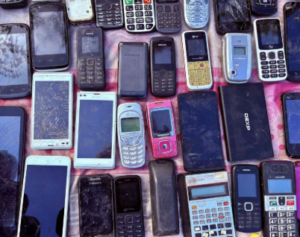
Photo by Tasha Kostyuk for Unsplash